Accordion voice
I am after my sunset the only voice
Who, like a wounded sinsonte, trinks again
To sow in my people my illusions
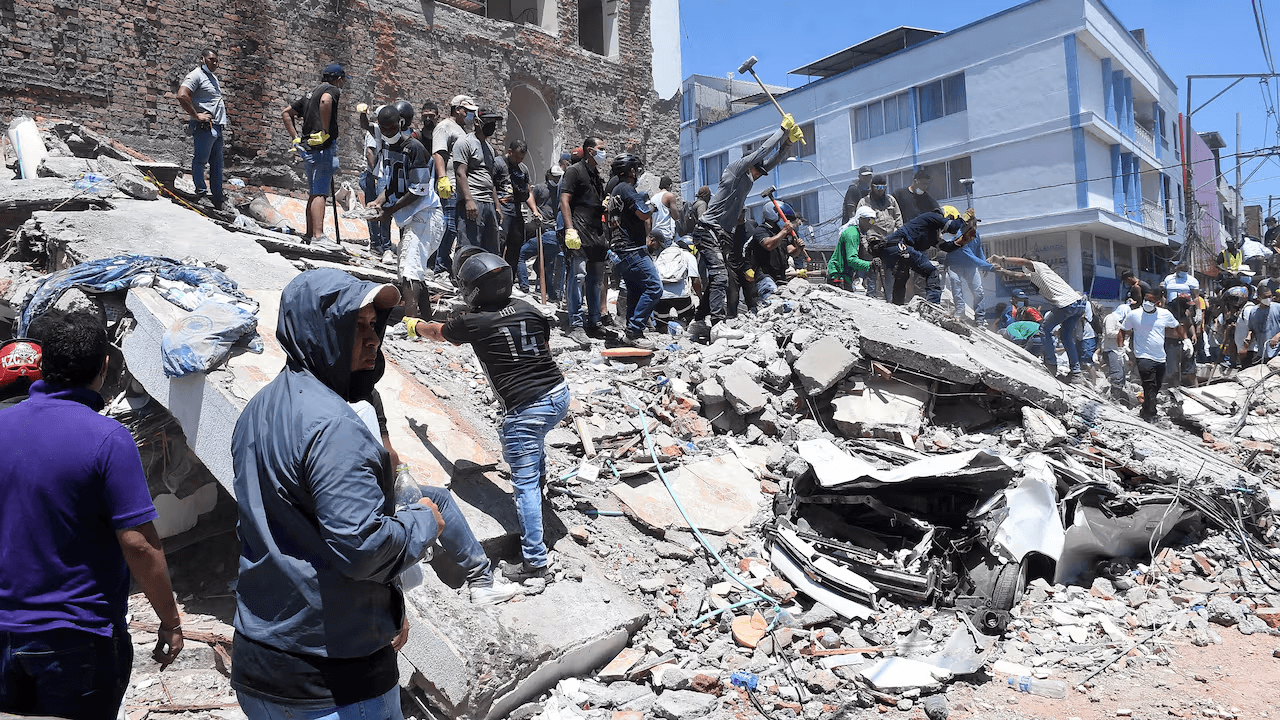
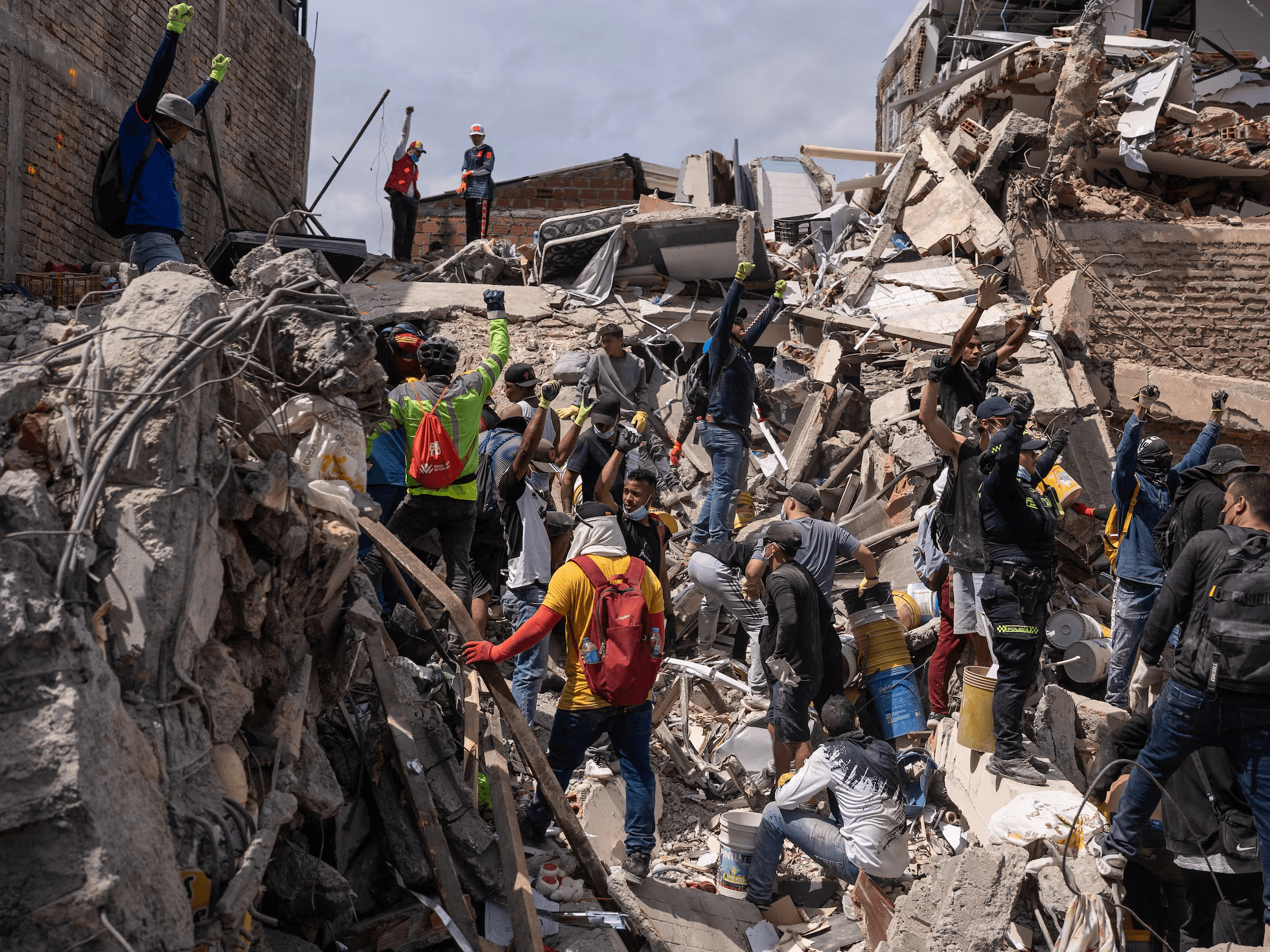
It is almost two months since the earthquake that fragmented the south-west of the country and, more than tragedy, the dead or those affected, there has been an unbearable noise of applause for those who have been supportive. Don’t get me wrong, I’m not against those who are volunteers or have contributed in any way; also, in their first weeks, I put my hands at the service of others. But so strident is the fury with which others exult for having helped that we end up drowning out the voices of those who truly need it. And yet people help, people duel with each other that they don’t understand, people pick up the rubble of others, people don’t let them forget their lives. So I wonder, why do people choose to be supportive?
Like a walled walk, the answer lies in two steps. The first, the easy one, is that people are supportive because bonism does exist, because the Catholic germ survives in the agnostic heart of modernity and because the homeland is our sister in the same pain. The second, even more obvious, is that people are supportive because they are selfish, because they do not want to help others but rather receive the prize of self-denial, and because what moves, before pain, is the same urge to show oneself - and to know oneself, even if it was little - useful. At their core, neither is irony, but it raises the same question about solidarity. Is it born from within? Can it be cultivated? Does it exist above oneself? Is it equal to sacrifice? Well, if these compasses make up the music of applause that sounds when another ton of humanitarian aid is dispatched, why doesn’t it sound the same when solidarity is shown in other scenarios or situations? Is it the magnitude, the gravity, the death itself, that leads to solidarity? Does it mean something else?
The first compass of the walk evangelizes us the writing. People are supportive because they are good, and they are good because they assimilate the message of faith in its simplest sense. In principle, like any other frustrated atheist, I am not bothered by the idea: perhaps like early Christians, people are devoted to others for love, even if it leads them to misery. People decide to be supportive because they look without seeing and act as if they are acting for themselves, and that makes society good on its own in the midst of the understanding human heat. However, the composition of families, clans, groups or nations has made the formation of a single common solidarity almost impossible; these imaginary ideas of something common start from tangible differences from reality, creating divisions that, On the one hand, they enable a union between fellows but, on the other hand, they prevent the common recognition of the human race. By extension, the forms of classification among people stir the fire of human heat by bringing it into the field of urgency; to resemble something, as the juglars say, is to prioritize it over its opposite, even when the deep sea of difference is in reality an alien. Any form of gardening removes the innate and shared element of solidarity to turn it into a form of division and compartmentalization: provenance, skin color or the imagined idea that our geographies merge into a harmonious national image become reflections of imagined divisions. These elements are expressions of a solidarity born from exclusive union, with criteria and parameters that are far removed from any humanist idea. Thus, I close this compass in a note of hierarchization and segregation, because in the process of urgency and similarity, the Samaritan involved becomes a cog in the extractive process of classification and pathologization: for the sample, the classification of "illegal" and "legal" humans in countries led by confessors and believers does not represent a public contradiction greater than that which happens to those who vote for them under the argument of national union and racial preservation. On the other hand, it is foolish to believe that by turning solidarity into a personal task or by refusing labels, one then avoids hierarchization; an individual’s solidarity is not enough to explain the entire rhythm that is generated from it nor leads to thinking about its function in society, It hardly helps to understand the reasons why people are supportive. If being supportive was a single individual task, why did you go so collectively to search under the rubble during the tragedy? What other subject can take this path but a very plural "we," with all that it can mean?
The second compass of the walk breaks the writing of this text and leads us to dissonance. People are supportive because they are selfish and, moreover, because being supportive makes them feel better about themselves. We know this well: we watch the videos of a lot of people who have never made or moved a finger to - now yes - bring something to someone. How not to be unbelievers? Every day, a carnival of companies and institutions overhangs the rubble over a thousand illusions, and perhaps the only sensible question that can be asked is whether they mean it or if they are taking us by the hair. The idea of solidarity as a business that preys on need is seen in many other settings, public and private, where officials, academics, activists, and so many strangers boast about contributing - whatever, but contributing, after all; to some degree, The self-satisfied spectacle of showing themselves to be useful is a reflection of the power that they have over each other, as these are less vulnerable, less in need of solidarity. That is why the noise of applause has been particularly unbearable: solidarity, if not sustained in time, is nothing but a demonstration that at worst is forgotten as an empty commemoration. Like all other events of digital life, tragedy is extinguished in the frivolity of our records and memories, increasingly abstracted from the touching experience to be replaced by a flighty "I was here"; in that scenario, solidarity is another experience to collect and possess, driven solely by the ego. But, if predation exists behind the mask of solidarity, how to explain that there are those who are supportive of what has no way of being grateful? In its most literal sense: how to explain being in solidarity with other lives that do not speak or are exposed in the public sphere, like an animal or an ecosystem? Is it mere ego to advocate for someone who cannot advocate for oneself?
I refuse to fall into the dissonance of both compasses, so I will write my own final score. Solidarity survives above egos, even though these afflict those we seek to be supportive, for solidarity implies a correspondence of affections that crosses the mantle of self-recognition. In essence, I assume that people are supportive because they value others in a way that cannot correspond to them: if in the first compass solidarity found its correspondence in gardenism and similarity, while in the second compass their correspondence was found in self-complacency, it can be understood that both are overcome to the extent that they empathize in a way that cannot be answered. That does not mean sacrificing oneself, but overriding someone else’s sensibilities in recognizing the weight of a story that does not belong to one another, but is shared by all of us in society. In its most basic form, solidarity is nothing less than cooperation, in which people recognize a common horizon of anxieties, fears and hopes; solidarity addresses them to transform them into a possibility, in which unfair and arbitrary conditions are overcome to which people are subjected. In any case, why do we sympathize with the affected, the victim, the prisoner, the displaced or the disappeared, if not to rise from a misery that we assume as our own?
After almost two months, you can’t lose the urge to lift each other up from pain. Solidarity, beyond humanitarian aid, donations or resources, includes a tool to shield one voice from the noise of news and depersonalization of tragedy. By taking on this real effect, solidarity will cease to act as a tool that segregates or hurts without wanting to do so, in order to offer a true possibility of overcoming and rebuilding; through the respectful memory of loss and pain, we decide to be solidary.